

Studio Update Spring 2026
A progress report on my painting and drawing work
This is a long-overdue update on my studio art, which may or may not be offered every quarter going forward, but it's spring and it seems like a good idea for now :)
18 Months In
As covered in my previous 2025 review, last year was the first full year of working in the new art studio space my wife and I began renting in the fall of '24. Now, after year and a half in, my conclusion is it's been money well spent. I find myself spending quite a bit of time there every week and feel I have made a good amount of progress. While I enjoy doing this, it's also proof that when you are paying for something, it helps from an accountability standpoint to make use of it.
Up to this point I have mainly worked on smaller pieces on paper. This is no different than what I was doing at home but I felt the need to re-think and work through my process before going larger and working with oil. But I do have the oil paints setup now and getting ready to dive into larger works on paper and canvas using those.
Turning It Loose
Part of the progress made so far is due to recognizing the need to get back into drawing and quicker painting studies in order to free my mind. This turned out to be a wise decision - it's something I should be doing all the time regardless, and in this case it help provide a much-needed breakthrough in my approach. The key observation came when comparing my sketches against finished paintings, such as the example shown below.

In seeing these two together specifically, I saw there were aspects of the sketch I liked that were missing in the paintings. The main intent of the sketches is to work out compositional themes, but they also help promote a looser, more intuitive style due to the greater immediacy of execution and lack of concern for a polished look. This helped me see the paintings needed to go in a more raw, openly expressive direction.
At the same time this was happening in the studio, at home the techie part of me was getting more serious about AI (Artificial Intelligence). Given the huge impact it is making on technology and our society as a whole, I felt the need to learn more about it and stay on top of developments. From a creative standpoint, like many artists ,I am aware of both the benefits and the threats posed by AI. At first though, my inclination was to think if AI could be effectively trained on my visual aesthetic, it could make make me better by providing insights I could not uncover on my own, or would take me many times longer to do so.
After purchasing a Pro subscription to Anthropic's Claude tool I realized the best way to start was by making it a thought partner, versus just having it try to make art for me. The core guidance for this was a quote by artist Agnes Martin that I feature in the introduction to my Painting & Drawing gallery: "Painting is not making paintings, it is a development of awareness."
From this perspective, the creative journey isn't about skill acquisition, it's about perceptual refinement and progressive self-recognition. Given this, the primary role of AI would be as an awareness amplifier, not a creative decision-maker. Help uncover patterns, articulate tensions, and track evolution, but the work and the "aha" moments are mine. Establishing that, Claude help reinforce the conclusions I had reached regarding sketches vs. paintings. It observed that my sketches had a "searching" quality (multiple overlapping lines, vibrating forms, ambiguity), whereas my paintings were beautiful but "arrived" - resolved, tidied, contemplative rather than searching. The key reframing it offered was don't just loosen up the paintings. Instead, use sketches to generate specific compositional tensions, then refuse to resolve them in the painting. A sketch thus becomes a constraint, not preparation.
Armed with a fresh perspective, I engaged in making some painting studies that would help refine this new approach before applying it to larger "official" works, including the three shown below.
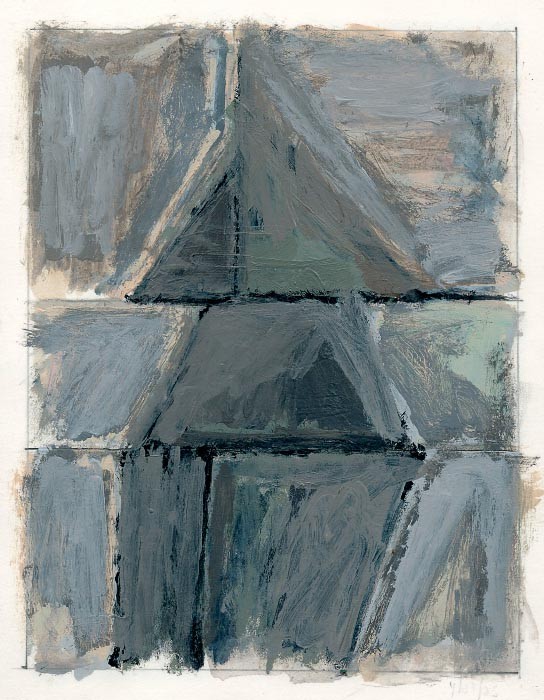
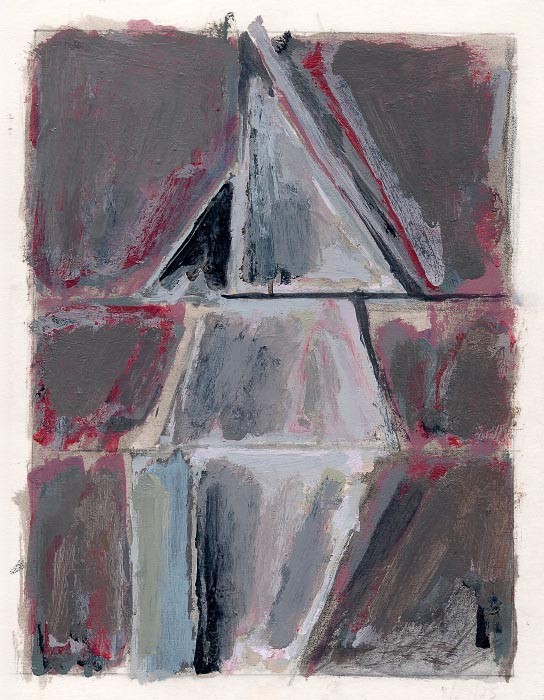
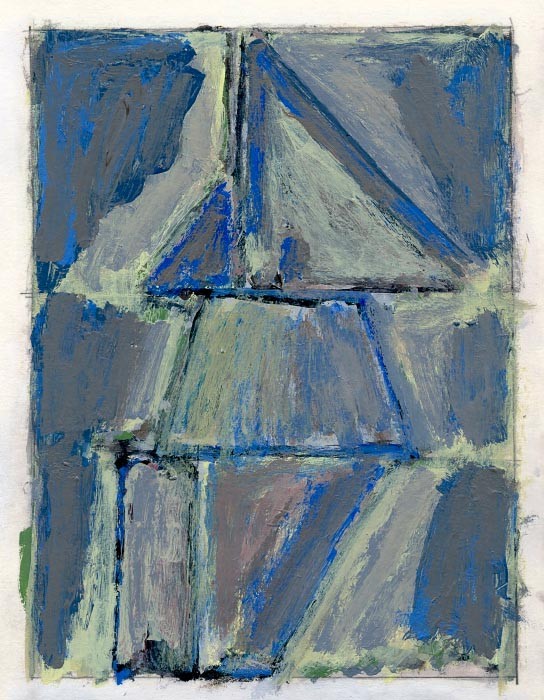
Upon uploading these for Claude's to review, it's key observation was clarity isn’t the goal, vibration is. Rough edges keep the eye moving; clean edges let it settle. A governing framework moving forward could include:
Working faster (outrunning editorial judgment)
Trusting initial gestures
Allowing rough edges to stay
Building layers without resolving contradictions
Modulating color and space intuitively as you go
Ultimately, success becomes about creating enough contrast (in color, scale, and texture) and variation to sustain interest while maintaining a searching quality. Create works dense with history but don't tidy away contradictions. Claude also recognized the power of creating variations on a theme, as these initial studies show. They share the same underlying structure but feel completely different through color and brushwork variations. This approach speeds learning, creates cohesion, and becomes a constraint that frees versus one that limits.
Postcards from the Edge
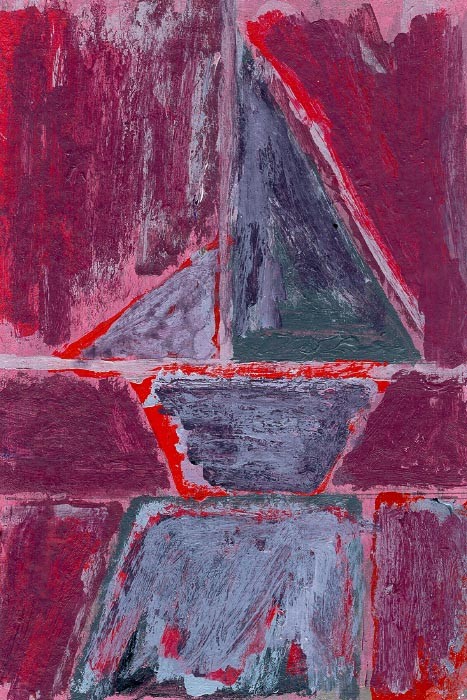
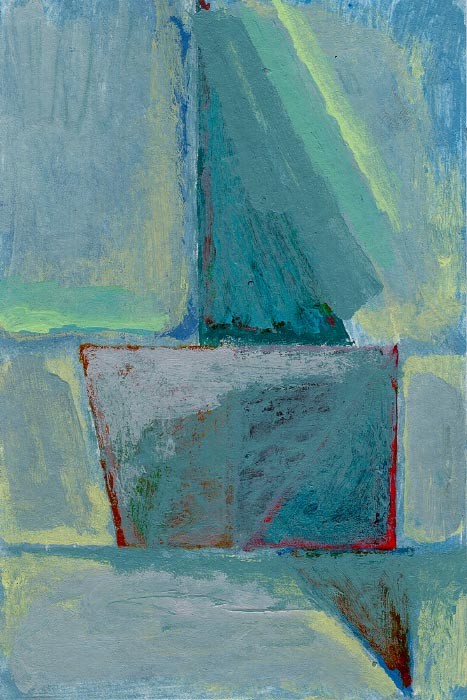
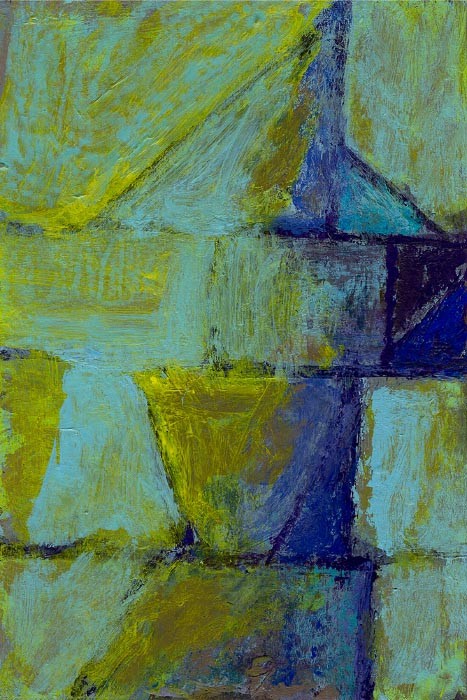
Additional studies that further explore this more intuitive style and the concept of thematic variants have been posted to my paintings gallery, along with even smaller postcard studies. Since I came across a pad of Strathmore watercolor paper in that size, it struck me that this could be another nice small format I could utilize to work faster, thus providing less opportunity to overthink. I also discovered that working on this scale offers a unique intimacy different from the other things I had done. And, as with the studies, I could try some different things and not feel bad if a few didn't turn out. The middle piece with the aqua tones below is a good example. With a larger painting, I would likely not have taken the step to paint over multiple areas at the same time and extend the strokes out into the background. The result provides a sense of mystery and compositional cohesion. The third piece explores this obscuring technique further.
Two (Locations) for the Show
The timing of this post is also happening right after the annual Boneyard Arts Festival here in the central Illinois area where I reside. This takes place every April across a wide variety of venues spanning an entire weekend. This is our third year taking part. This year my wife and I both showed work at the OLLI (Osher Lifelong Learning Facility) headquarters in downtown Champaign on Saturday, and then at our studio space in Tolono on Sunday. A few pictures of my setup below, two from each respective location. At OLLI there was only space enough to show my mashup work, but I had more room to spread out at Tolono to include several small paper and postcard paintings. While sales were less than expected, I did receive a lot of positive feedback, which helps me know the work is heading in the right direction.


That's it for now - going forward, I hope to post smaller, quicker updates on new work, both physical pieces in the studio as well as digital mashups, versus waiting for more comprehensive updates like this. These may coincide with new Instagram posts, and changes and additions to respective galleries here on the site.
